

What actually works for sarcopenia?
The two pillars you’ll hear about again and again are:
- Resistance (strength) training and
- Good nutrition, especially sufficient, high-quality protein and adequate calories.
Combining structured resistance exercise programs with protein supplementation consistently shows the best muscle mass, strength, and function improvements in older adults.
So where do compression supports fit in? While they won’t reverse sarcopenia like strength training and nutrition can, they can be a handy addition to your treatment plan.
How compression supports help with sarcopenia

LumboTrain
- Improved circulation and reduced swelling. Graduated compression increases venous return and can reduce peripheral swelling (oedema). If you have venous insufficiency or leg swelling, that alone can make walking and exercise feel easier.
- Reduced muscle soreness and faster recovery after activity. Systematic reviews and meta-analyses in exercise settings show compression garments can reduce muscle strength and power decline after exercise and may speed subjective recovery (less DOMS). That can help with starting or progressing strength programs, since less soreness means a higher chance of sticking to the program.
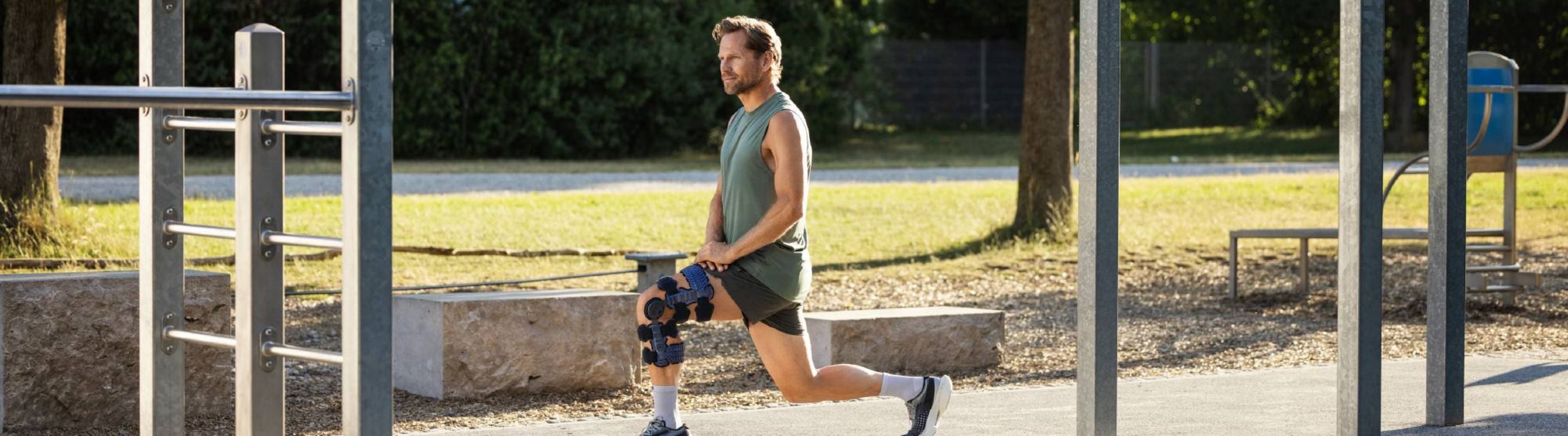
- Better proprioception and perceived stability. Well-designed compression supports like the GenuTrain, LumboTrain, and Calf Compression Sleeves provide gentle sensory input around a joint or muscle, improving awareness of how you move and position that body part. For people with weakness or balance problems, extra sensory cueing can support safer movement and confidence during exercise.
- Pain relief and joint offloading that enables exercise. If pain from knee osteoarthritis, lower-back stiffness, or recurrent swelling is keeping you from resistance work, the targeted support offered by braces like the GenuTrain A3 and LumboTrain can reduce pain and restore function, making exercise more comfortable and enjoyable.
How to use compression supports for sarcopenia

VenoTrain Compression Stockings
1. Start with your goal.
If the barrier to exercise is swelling, venous symptoms, or pain, use a medical-grade compression stocking or targeted support while progressing a tailored strength program.
2. Choose the right product for your needs.
Calf sleeves or socks can reduce venous pooling, improve calf muscle activation, and ease leg fatigue during walking or exercise sessions. They are good for someone who reports leg heaviness or swelling after standing.
Graduated compression stockings can support circulation and control oedema (e.g., in cases of chronic venous insufficiency or long periods of sitting/standing). They are also useful during long travel or prolonged immobility.
Knee supports (e.g., GenuTrain A3) offer targeted compression and a stabilising massage pad to reduce swelling and pain from knee osteoarthritis or instability. They can help keep you active and help with lower limb strengthening routines.
The LumboTrain Back Support provides sensory activation of lumbar muscles and a massage effect that can reduce pain and improve posture. With your lumbar protected, you can exercise safely and more comfortably.
3. Use compression strategically around training sessions.
For many older adults, wearing compression during and immediately after exercise can reduce perceived soreness and swelling. Evidence supports faster recovery and small improvements in muscle power after exercise when compression garments are used.
4. Mind the fit and pressure:
Medical-grade compression is prescribed by compression class (mmHg). Generally, class 1 (moderate) or 2 (Strong) should be sufficient, unless you have more serious oedema or vein issues. Additionally, compression should fit you like a glove. Too tight, and it’s uncomfortable; too loose, and it’s ineffective. Check your sizing in our sizing guides (available on every product page). If you’re experiencing any issues here, our customer support team will gladly help.
Safety and when to seek professional advice
- If you have peripheral arterial disease, uncontrolled diabetes with neuropathy, fragile skin, or open wounds, get medical advice before using compression garments.
- If you suspect sarcopenia (noticeable decline in strength, slow gait speed, difficulty rising from a chair), consult your clinician for a formal assessment and a tailored exercise and nutrition plan.
To sum up
Sarcopenia responds best to progressive resistance exercise plus good nutrition. Compression supports like calf sleeves, compression stockings, knee, and back supports are helpful additions. They can reduce swelling, speed up recovery after activity, improve proprioception, and reduce pain that otherwise limits exercise participation. When used thoughtfully (with the right product, proper fit, and as part of a structured plan), compression supports can help people with sarcopenia get stronger, stay active, and maintain more independence.