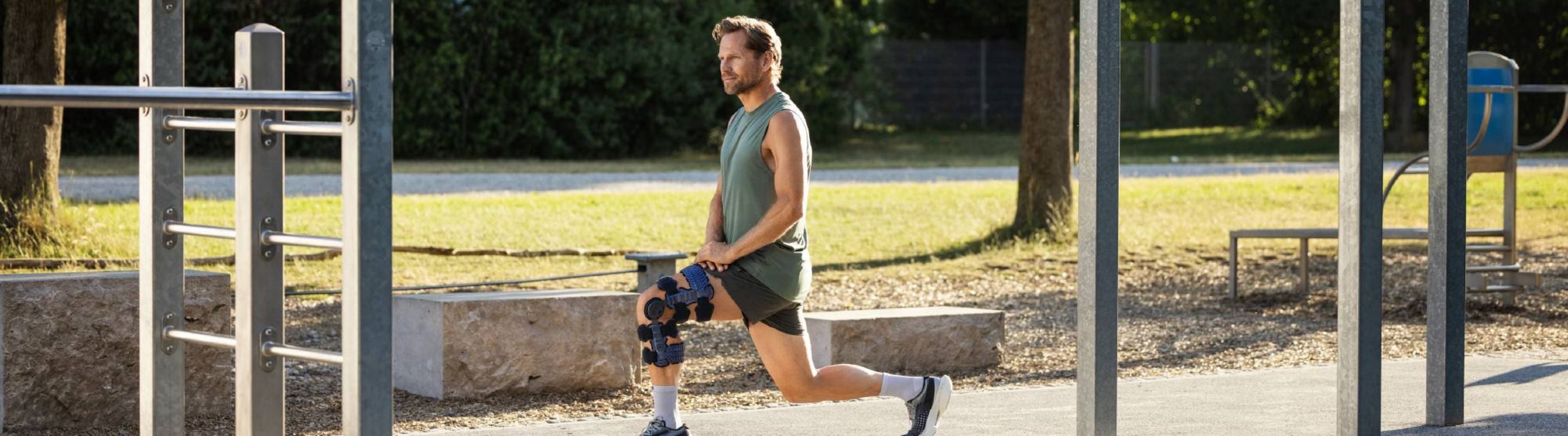


While it can be tempting to grit your teeth and ignore the pain, these sensations are often signals from our body that shouldn't be ignored. The issue should be treated to reduce the pain and prevent it from becoming more serious.
Why are my knees stiff?
If the weather gets cooler and your knee(s) are feeling stiff, it is often indicative of a long-standing issue. For example:
- Arthritis is the most common health concern that causes these symptoms. Generally, arthritis affects people over the age of thirty and is caused by wear and tear from sports and overactivity. When the weather is cooler, the affected joints expand, become stiff, and are more sensitive to pain.
- Damage to the meniscus or tendons in the knee. This often happens when there’s an older injury, usually a tear that has only partially healed, and scar tissue has formed. People often comment that, during the winter, an old scar will begin to throb. This is because your body is trying to keep you warm, so the soft tissues and fluid around the joints begin to expand. When there is scar tissue present, the nerves are easily irritated, which causes pain.
A range of other issues could also cause your knee to feel particularly sensitive in cooler weather. It is always best to see a doctor or physiotherapist to determine the best course of treatment.
In the meantime, there are a range of things you can do to manage the pain and discomfort. You can stop dreading winter and stiff knees with just a few simple changes.
Compression for stiff knees
Medical-grade compression is one of the best ways to manage stiffness and aching in the knees.
Using a flat knit garment like the GenuTrain from Bauerfeind will increase blood flow to the affected area, while stabilising and activating the muscles to take pressure off the cartilage.
The GenuTrain knee brace is best worn during the day, both while you are stationary, as well as when you’re active. The blood flow will keep your knees warm and more resilient to the cold weather.
Stretching and strengthening for knee stiffness
Keeping your legs active and strengthening the larger muscles in your legs is a great long-term way to protect your knees and minimise any stiffness or aches.
Regularly taking walks, building up strength in your glutes, quads and hamstring will all ensure you maintain strong and healthy knees.
Try an exercise such as Clock Lunges to build strength in your knees.
Supplements and vitamins for healthy joints
Vitamins and supplements are shown to help manage pain and discomfort in your knees. These can be taken all year round and will be particularly helpful during the winter months.
Vitamin D, Glucosamine, Omega-3 fatty acids and curcumin all help to reduce inflammation in the cartilage. These work best when used in conjunction with stretching and compression to ensure the joint has a full chance of recovery. You should also always speak with a physio or doctor.