

Anatomy of the Glutes
The glutes consist of the glute medius, minimus, and maximus. The maximus is the largest and strongest muscle in the body. You use it when you need force to move forward, like to walk, run or climb. It helps you extend your leg out and keep your hips balanced and your trunk upright when you’re sitting down.
Meanwhile, your gluteus medius and minimus help move your thighs. They help with abduction and rotation of the legs.
Powering up these muscles correctly should involve lengthening, shortening, hold, and twisting motions - the best of which you will find below.
The Best Glute Exercises
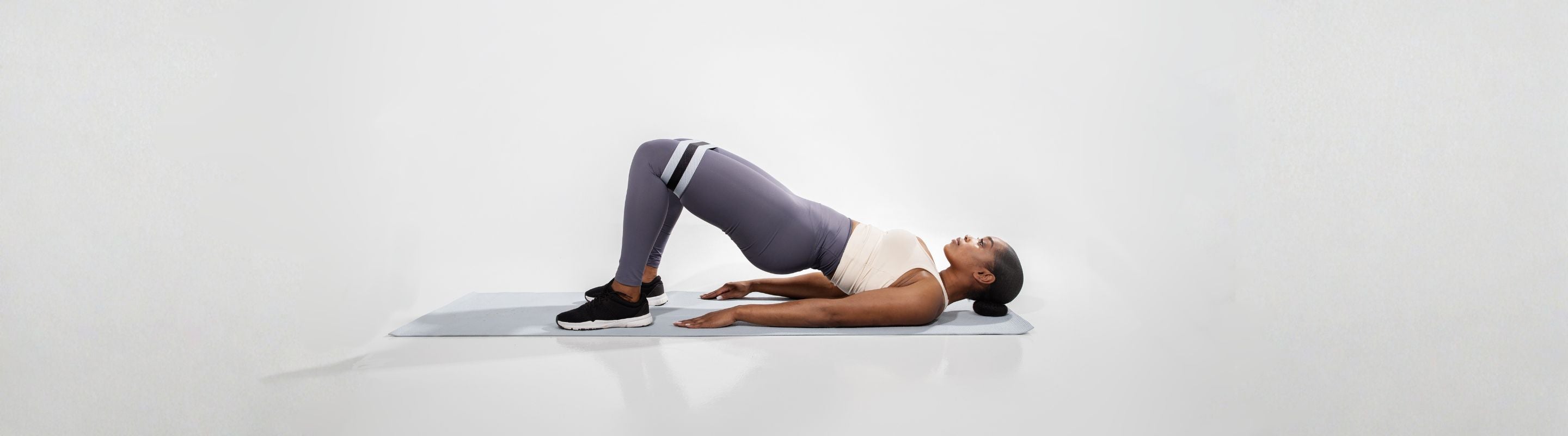
Bridge with leg extension
This glute bridge variant combines shortening, lengthening, and stability work to really fire up the glutes.
- Begin lying face up on a yoga mat with your knees bent, feet hip-width apart, and your arms resting by your sides. Keep your spine neutral.
- Inhale and activate your core. Exhale and push your heels into the mat to lift your hips until you are resting on your upper back, creating a straight line from shoulder to knee. Ensure that your glutes initiate the movement. This is your starting position.
- While keeping your core engaged and hips elevated, straighten one of your legs. You should feel tension in your glutes and hamstrings as you do this.
- Inhale and return to the starting position.
- Complete 10-15 repetitions per leg before taking a break or set a timer and complete as many as you can in a set period.
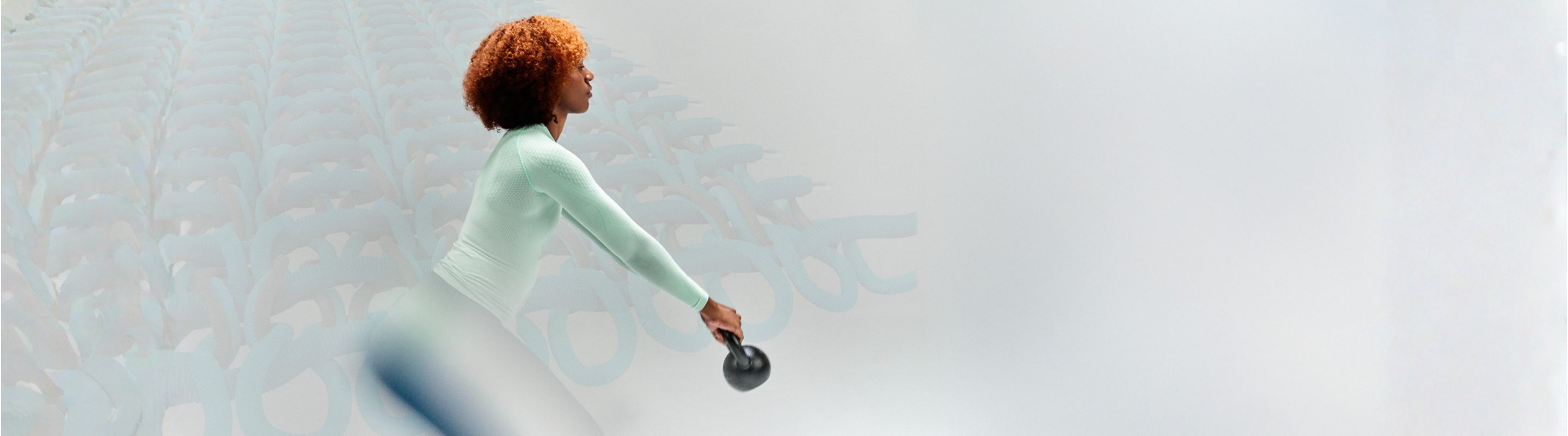
Kettlebell squat
Squats are a favourite glute enhancer, targeting the glute maximus. Adding a weight, slightly spreading the legs, and leaning a little forward increase its targeting potential.
- Stand upright with your feet spread shoulder-width apart.
- Place a kettlebell of a weight appropriate to your ability at your feet. Keep your feet flat on the floor and squat down by bending at the hips and knees.
- Grasp the kettlebell handle with both hands.
- While keeping your elbows straight, return to the standing position.
- To protect your back from injury, avoid slumping and slouching. Keep your knees positioned directly above your feet and your heels planted on the ground.
- Repeat the upward and downward movements in a steady, controlled fashion.
- Relax and repeat as your ability allows.
Walkling Lunges
Walking lunges hit all of the glute muscles as they require powerful movements and stability.
- Stand up straight with your feet shoulder-width apart. You can put your hands on your hips, cross them over your chest, or leave them hanging by your sides - whichever position you find more comfortable. Your spine should stay neutral, and you shouldn’t lean back or forward.
- Step forward with your left leg, pressing your weight into the heel. Make sure you step out enough so that your knees are at 90 degrees, your pelvis stays neutral, and your front knee does not go over your toes. Pause for a couple of seconds.
- While keeping your right foot planted firmly on the floor, step forward with your right leg, repeating the same movement.
- Alternate your legs like this as you “walk” forward.
- Do 2-3 sets of 8-12 reps.
Single-Leg RDL
RDLs lengthen the glutes, and a single leg variant increases the demand. As this exercise targets one cheek at a time, it can also help you avoid an imbalance.
- Stand up straight on a yoga mat.
- Lift your right foot off the floor, extend your leg behind you, and soften your left knee.
- Activate your core.
- Inhale and squat down on your left leg as far as possible, reaching your left hand toward the floor. When you've squatted as far as you can, bend from the hips to touch the ground with your left hand.
- Keep your back neutral throughout.
- Exhale, squeeze your glutes and rise to complete one rep.
- Complete 10-15 reps and repeat for the other side.
- Do sets depending on your ability.
Sumo Squat
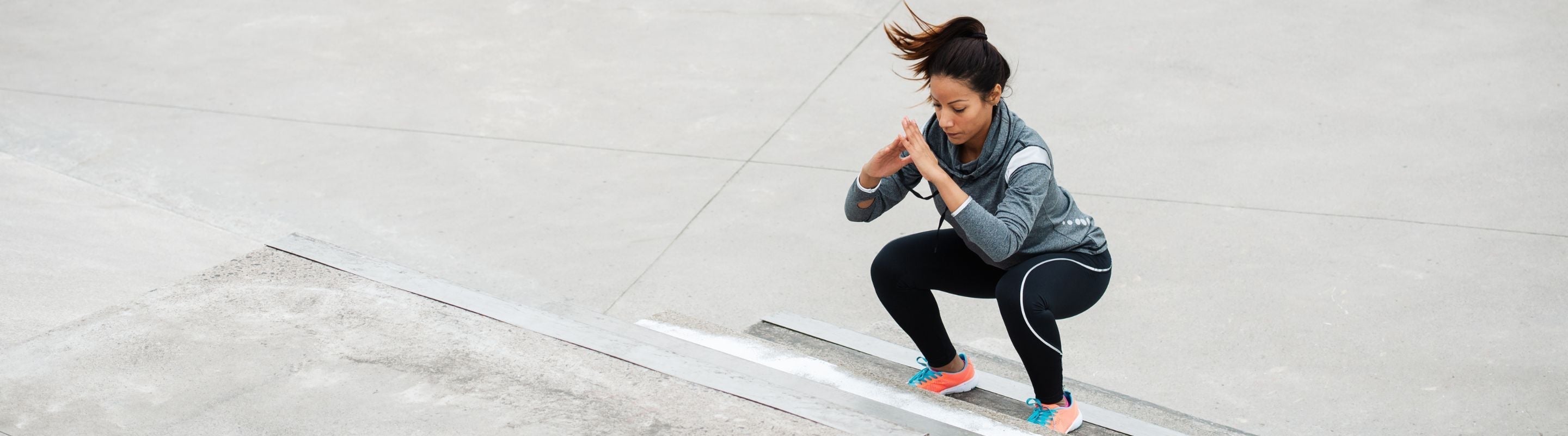
The sumo squat hones in on the glutes and thigh abductors.
- Stand upright and step outward to the side until your feet are a bit wider than hip-width apart.
- Point your toes outward so they align with the direction of your knees.
- Clasp your hands in front of your chest and activate your core.
- Slowly squat down by pushing your butt back and bending at the hip.
- Lower yourself until your thighs are parallel to the floor, then pause for a couple of seconds at the bottom of the motion.
- Tighten your glutes and push yourself back up through your heels.
- Repeat for 3 sets of 8-10 reps.
Banded Side Shuffle
Banded side shuffles focus on the glute medius and minimus.
- Mind your form. Bend slightly at the hips and knees. From this position, step or ‘shuffle sideways. Move first to one side and then the other. Your pelvis should not move throughout the exercise, and you shouldn’t feel any tension in your lower back. If you do, adjust your form.
- Don’t let your ankles meet. You need to keep tension in the resistance band throughout the exercise. The band should not feel loose around your legs at any point. You can take smaller quick steps or slower wide steps as long as the band stays tense.
- For an easy shuffle, place the band up near your knees. For a hard shuffle, place it around your ankles.
Lunge with twist
This lunge variant targets the core, glutes, and hip flexors. In particular, the twisting motion squeezes and engages the glutes more than a traditional lunge.
- Stand up straight with your feet shoulder-width apart.
- Raise your arms and bend your elbows so your fingertips touch your temples.
- Take a long step forward with your right leg, lowering yourself until your right knee is bent at 90 degrees and your thigh is parallel with the ground.
- Twist your trunk at the lowest point of the lunge, then twist back to the forward position. This movement should be slow and measured to avoid unnecessary stress on the spine.
- Push up with your leading leg until you’re back at the starting position.
- Complete ten reps before switching to the other leg.
- Do three sets. If you feel pain in your knee or are just getting into lunges, start with one or two sets and work your way up. If you’re finding the exercise too easy, add more reps to your sets or do more sets overall.
Support Your Workout
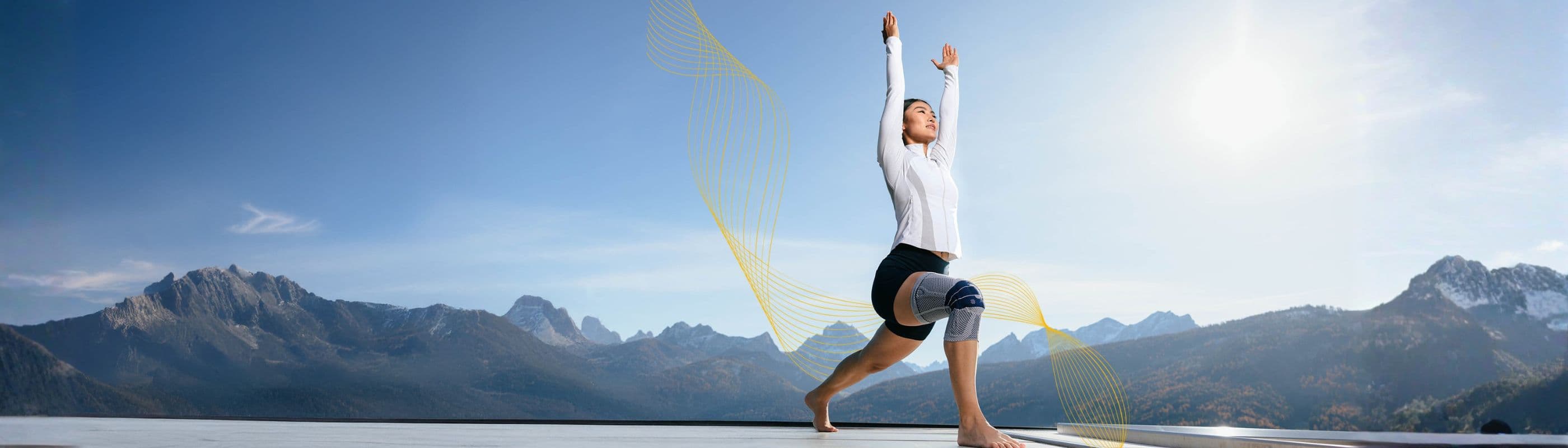
Sports compression is a great way to power your workout, reduce pain, and prevent injury. The best picks for this workout include:
- Sports Wrist Straps for handling heavy kettlebells
- Sports Back Support for activating the core and protecting the lumbar
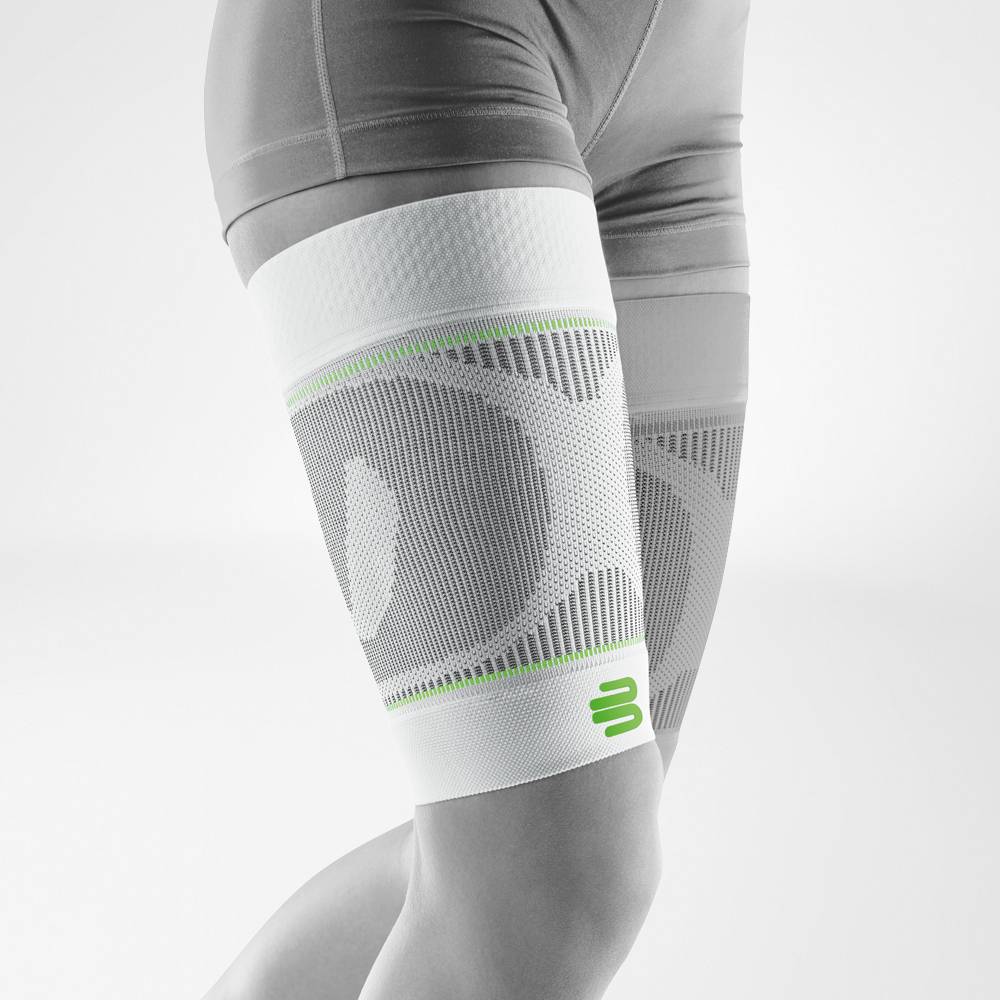
- Sports Thigh Sleeves to improve leg muscle activation
- And Sports Knee Support to protect the knees under pressure